Français

Community & Urban Safety Monitoring and Evaluation Toolkit

Helping communities across Canada measure safety and well-being at the local level

…and embracing all the complexities that come along with it

Many communities across Canada have a Crime Prevention, Community Safety, or Community Safety & Well Being plan, and are grappling with how to measure its ongoing progress and results. Monitoring safety indicators and evaluating comprehensive multi-sector initiatives is not as straight-forward as evaluating a single program. Community safety and well-being are shaped by many interconnected factors at the individual, family, community, and system levels. Monitoring police-reported crime rates is only a small piece of the puzzle, and it is simply not representative of the bigger picture.

So, communities are asking themselves:

In response to this complexity, the Community and Urban Safety Monitoring (CUSM) Project (2023-2026) brought together cross sector partners to explore these questions and help design this toolkit. The toolkit is aimed at local practitioners, and intended to help communities:

The project was led by the Canadian Centre for Safer Communities (CCFSC) and inspired by the global Urban Safety Monitor (USM) supported by UN-Habitat. CCFSC worked with 10 pilot site municipalities across Canada, and was supported by Indigenous, national, and international advisory partners.

See here for more information about the CUSM Project background, and below for the project advisors and pilot sites.

CUSM Pilot Sites
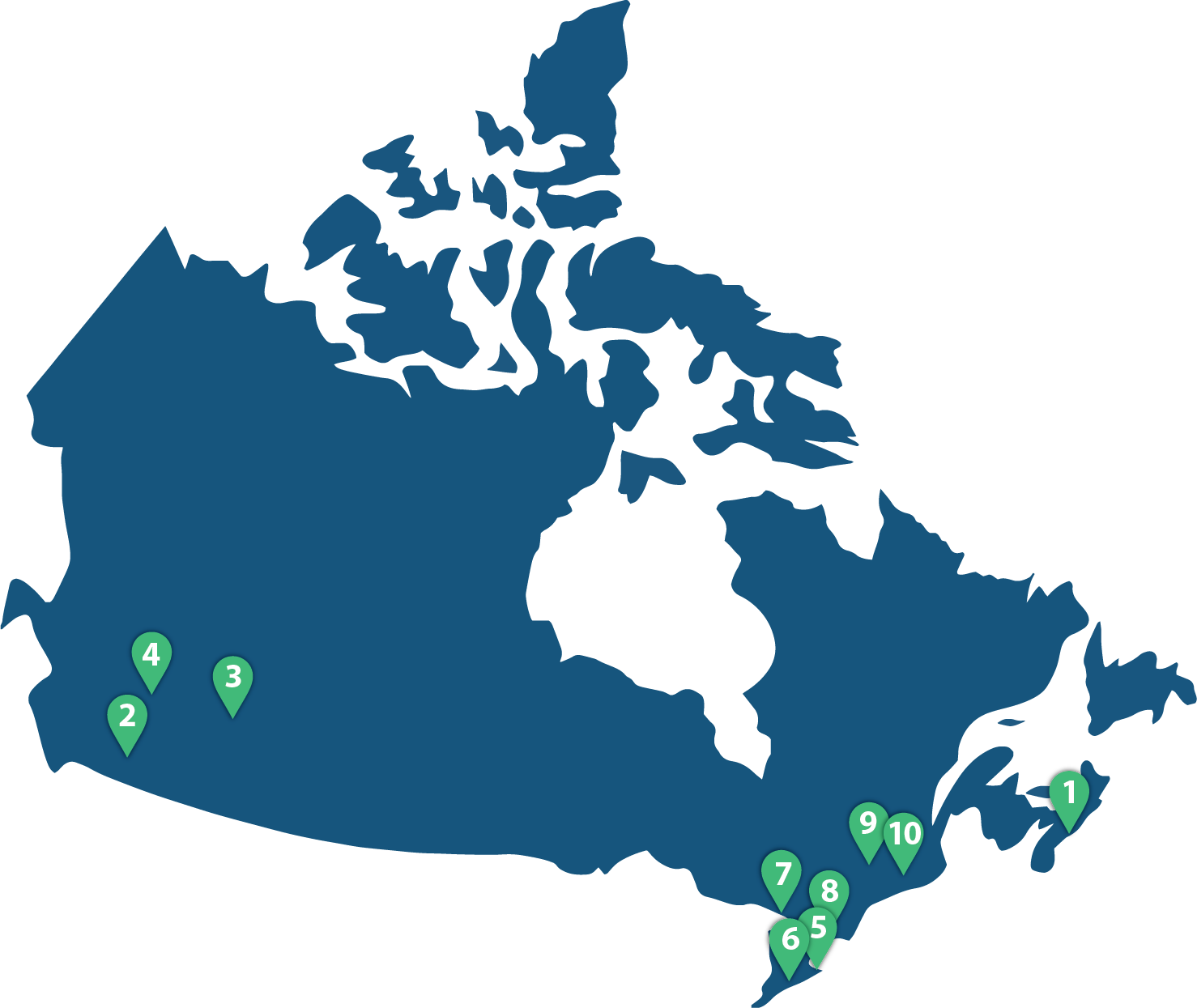
  1. Halifax (NS)
  2. Kelowna (BC)
  3. Edmonton (AB)
  4. Williams Lake (BC)
  5. Niagara Region (ON)
  6. Brantford (ON)
  7. Sudbury (ON)
  8. Durham (ON)
  9. Terrebonne (QC)
  10. Montréal (QC)
  • Alexandra Abello Colak (Research Fellow) – London School of Economics and Political Science (UK)
  • Amy Siciliano (Public Safety Advisor) – Halifax Regional Municipality
  • Angela Vallely (Senior Policy Advisor) – Aboriginal Community Safety Planning Initiative – Public Safety Canada
  • Ann Champoux (Executive Director) – International Centre for the Prevention of Crime
  • Ann Marie Beals (Assistant Professor) – Wilfrid Laurier University
  • Anna Rau (Executive Director) – German-European Forum on Urban Security
  • Asma Kaouech (Program Manager) – European Forum on Urban Security
  • Brooke Wharton (A/Executive Director) – Cities Revitalisation and Place, Cities and Active Transport (Australia)
  • Emma de Villiers – Fixed Africa (South Africa)
  • Barbara Holtman – Fixed Africa (South Africa)
  • Humera Khan (President and Co-Founder) – Muflehun
  • Irvin Waller (Emeritus Professor) – University of Ottawa
  • Johannes (Joop) De Haan (Crime Prevention and Criminal Justice Officer) – UNODC
  • John Anzola Morales (Office Advisor) – Coexistence and Justice of Bogotá, Secretariat of Security (Colombia)
  • Macarena Rau Vargas (President) – International CPTED Association
  • Nomusa Shembe (Senior Manager) – eThekweni Municipality (South Africa)
  • Rachel Locke (Director) – Violence, Inequality and Power Lab & Peace in Our Cities (US)
  • Santiago Uribe (Executive Director) – Coporación Oficina de Resiliencia de Medellín (Colombia)
  • Shamoy Hajare (Programme Management Officer) – Human Rights & Social Inclusion Unit, Global Knowledge and Advocacy Division (GKAD), UN-Habitat 

Why This Matters

Across communities, various partners – including sector leaders, local practitioners, community partners, resident champions, government staff, and elected officials – are increasingly working together to support community safety in interconnected ways. The root causes and social determinants of safety have been increasingly valued internationally and across Canada, mirroring the earlier movement for the social determinants of health.

There is growing recognition that intersectional challenges including poverty, racism, discrimination, intergenerational trauma, and the lasting impacts of colonialism, result in inequities and the overrepresentation of Indigenous and other racialized people in the criminal legal system. Many of the larger systems set up to address issues of crime and safety – including the criminal legal system (police, courts, corrections) – are not aimed at tackling root causes or improving underlying conditions for safety.  

To truly improve safety, communities need strategies that promote equity, early prevention, targeted intervention, and people-centered responses. This means that the objectives of community safety and well-being are broad, and so are their related indicators. 

While police-reported crime statistics can provide some information, community safety is about so much more. Monitoring and evaluating community safety initiatives using a range of indicators promotes evidence-informed decision-making, continuous improvement of efforts, accountability for change, celebration and recognition of successes, and sustainability.
Community safety through well‑being means strengthening equitable conditions that reduce root causes of harm, alongside coordinated system support when harm occurs.

Why Monitoring & Evaluation Is Important

Evidence-Informed Decision-Making
  • Supports informed decisions about the initiative’s focus, priorities, actions, and resource allocation.​
  • Identifies good practices, areas for improvement, and encourages adjustments along the way to ensure that the initiative is meeting the needs of the community and reaching its intended outcomes.​
  • Ensures that the initiative and its partners are accountable to the community and those investing time and resources into it, by providing evidence of impact and transparency in how the initiative is being managed.​
  • Provides an opportunity to recognize and celebrate in tangible ways the successes, the energy and resources being invested, and helps with motivation to keep going. ​
  • Helps demonstrate results which can support longevity, and highlights factors that contribute to success so investments can continue to be made in the right places.

What is Monitoring & Evaluation?

Monitoring Evaluation Graphic 1

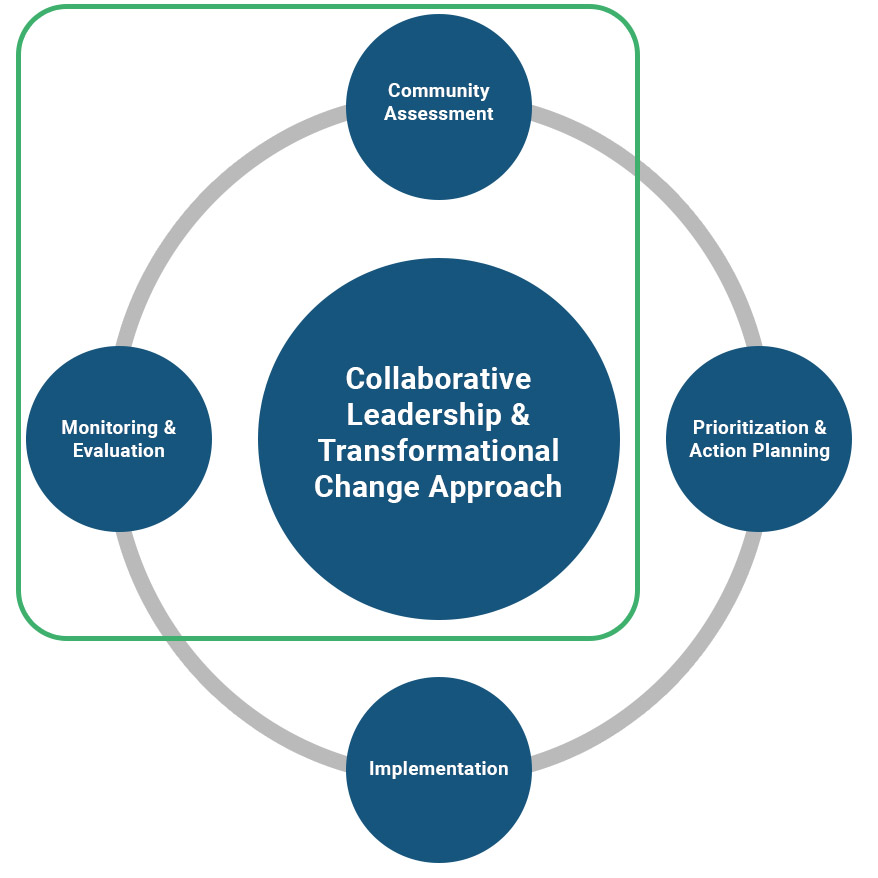
Evidence-informed community safety planning generally follows four main phases, all supported by local multi-sector collaboration. At CCFSC, we call these phases: 

  • Community Assessment
  • Prioritization and Action Planning
  • Implementation, and
  • Monitoring and Evaluation.

Too often, monitoring and evaluation are an afterthought. This toolkit aims to bring monitoring and evaluation into the forefront and promote evaluative thinking at every stage. 

Monitoring is the systematic collection of information to track progress about an intervention over time, often part of performance measurement. Monitoring is typically used to:

  • Track whether activities are being implemented as planned
  • Identify emerging issues and support real-time course corrections

Evaluation is a more in‑depth, systematic assessment of the design, implementation or results of a policy, service, or program. Evaluation is used to:

  • Understand what is working (and why) and identify areas for improvement
  • Support learning, accountability, and future policy or resource decisions

Importantly, the work done during the Community Assessment phase is also very relevant to monitoring and evaluation. Community Assessment typically involves gathering existing data and information about a community, as well as engaging with diverse groups to explore and identify local strengths, needs and gaps. The information gathered during this community assessment phase should serve, when relevant, as “baseline” information about the state of safety and its underlying factors in the community prior to comprehensive and collaborative planning. So, the key indicators and measures of safety and its related factors are important to think about for community assessment as well as for ongoing monitoring and evaluation.

Together, community assessment, monitoring, and evaluation provide a clearer picture of progress and impact, helping communities learn, adapt, celebrate successes and improve over time.

For more information on how CCFSC is defining terms related Monitoring and Evaluation, see our Toolkit Definitions Page.
WHAT ARE THE KEY INDICATORS OF COMMUNITY SAFETY & WELL-BEING IN CANADA?

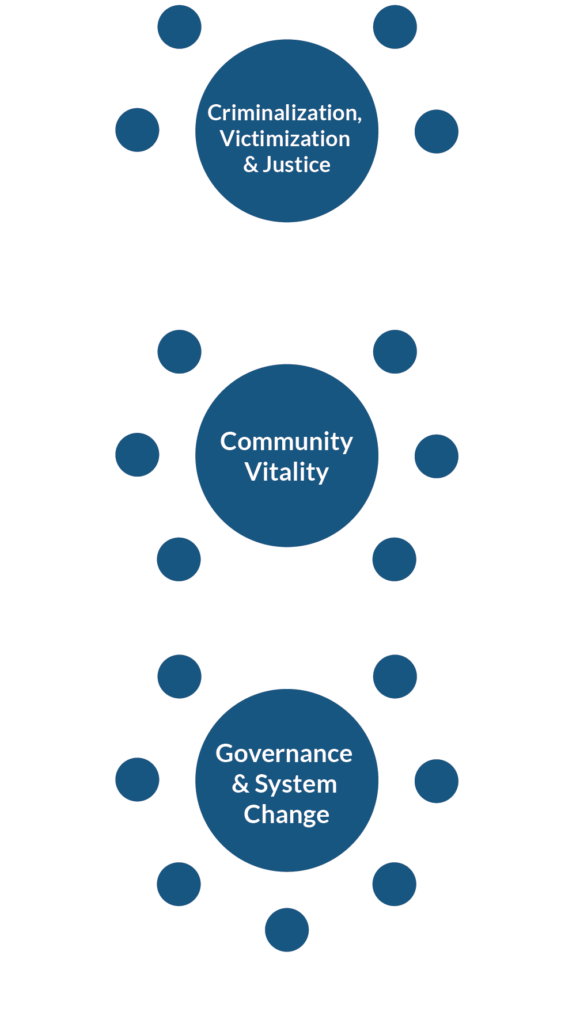
Community safety and well-being are influenced by many interconnected factors associated with criminalization, violence, and disorder, including risk and protective factors at the individual, family, community, and system levels. To make this complexity easier to navigate, this toolkit organizes indicators into three core domains:

  1. Criminalization, Victimization & Justice
  2. Community Vitality
  3. Governance & System Change

These three domains create a systems level picture of safety, which correspond to the themes under the Urban Safety Monitor (USM) supported by UN-Habitat. These domains help communities focus on a balanced set of indicators that reflect root causes, equity, prevention, community context, and system performance. Together, the domains support communities to:

  • Highlight critical factors linked to safety and well-being
  • Focus local efforts on what matters most
  • Support meaningful monitoring and evaluation of outcomes and impact
  • Maintain consistency across regions while allowing for local tailoring

These indicators and their related measures were identified through a comprehensive review of existing indicator frameworks and datasets relevant to community safety. In addition, Indigenous perspectives were included throughout and within the core domains.

Indigenous Definition of Safety:

Safety is when there are no threats to mental, physical, spiritual, or emotional wellbeing.
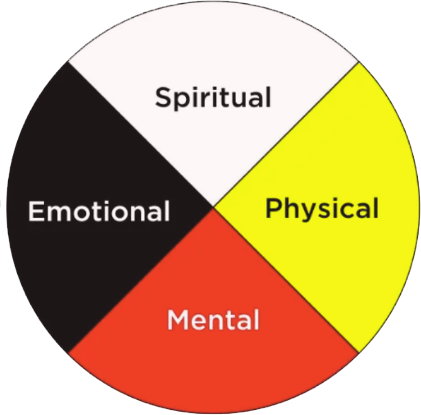
Indigenous Definition of Safety

This definition of safety was co‑developed with several Indigenous community members through 10 sharing circles and 5 interviews held during the CUSM project. Participants were invited to define safety in their own words, many drawing on the medicine wheel’s four dimensions of well‑being. This definition was then used to inform broader conversations about indicators to be added or adapted for the project’s output.

Examples of Indicators from each dimension of the medicine wheel:

  • Mental: Access to Indigenous-led mental health services
  • Physical: Barrier-free health care, Indigenous health care services, physically safe environment
  • Emotional: Trust in neighbours, Child welfare placement
  • Spiritual: Access to culture, access to land, participation in ceremony and spiritual activities
  1. Community care

Community care emerged as a foundational element of safety. Participants described safety as coming from strong relationships, mutual support, and everyday acts of looking out for one another (e.g., helping neighbours, informal watchfulness).

Example measure: Trust in neighbours

  1. Traditional values and languages

Participants identified traditional values, cultural practices, and Indigenous languages as both strengths and areas in need of revitalization. People reported feeling safest when they could practice culture, uphold values, and speak their languages without barriers.

Example measure: Participation in traditional cultural activities and ways of life

  1. Strained relationships with the Canadian legal system

Experiences with policing, courts, and incarceration surfaced as major contributors to feeling unsafe. Many participants described deep mistrust of these institutions, shaped by historical and personal experiences.

Example measure: Trust or confidence in police

  1. Experiences of racism and discrimination

Racism and discrimination were frequently described across daily life, health care, education, and other institutions. These experiences were tied to emotional and psychological impacts.

Example measure: Psychological distress linked to past year exposure to racism or aggression

Within these three main domains, there are many sub-domains, and an extensive list of indicators each with specific measures and data points that could be used. For example:

Sample Measures for Key Indicators

Core Domain Sub-domain Indicator Sample Measures
Criminalization, Victimization & Justice Personal security Perceptions of safety
  • Perceptions of safety for neighbourhood crime
  • Perceptions of safety for schools
Community Vitality Human rights & basic needs Housing
  • Housing insecurity
  • Housing hardship
  • Homelessness (current #s, chronic #s)
  • Homelessness prevention (# people accessing supports)
  • Availability of shelters
Governance & System Change Political & community security Multi-sector collaboration
  • Level of partner participation pre- and post-engagement
    • Number of agencies involved in various activities
    • Level of commitment of partners
    • New links between partners
    • Number / types of formal agreements in place
  • Ongoing health and effectiveness of local collaboration
  • Community leaders' perception of collaborative leadership skills and performance

Rationale for Indicators

The indicators and measures included in this toolkit were identified based on decades of research on effective community safety, CCFSC’s years of experience in local community safety work, as well as on the advice and input of the project’s advisors and pilot site representatives. The indicators and measures chosen for inclusion are based on the following rationale:

Decades of research in Canada, across Indigenous lands, and elsewhere have shown that:

23 1

Risk & protective factors exist at every level (individual, family, community, system)

02 Vulnerability increases

Vulnerability increases when risk outweighs protection

If we make evidence-informed investments to address risk factors, enhance protective factors and increase community vitality, by:

03 Meeting basic needs

Meeting basic needs, human rights, and addressing inequities

04 Suporting Positive Development

Supporting positive development and healthy relationships

05 Fostering Community

Fostering community connection and resilience

And if we commit to multi-sector collaboration approaches that:

09 make targetd investments

Strengthen governance & shared direction around desired results

01 Risk and protective factors

Centre reconciliation, inclusion, and diversity

06 Strong Governance

Prioritize evidence-informed practice & continuous learning

22 1

Make targeted, meaningful, and sustainable investments

Then communities will see:

10 Less Criminalization

Reduced criminalization, victimization, violence, and insecurity

11 Increased Community health

Improved community health and safety

12 Increased feelings safety

Increased feelings of safety

When these conditions exist, harms and costs associated with crime and violence are reduced:

14 Systems become more efficient

 Reduced reliance on justice systems

17

More efficient and less costly systems

16

Greater social and economic returns

15 Greater Community vitality

Stronger community vitality

If systems and sectors work together, and adequate sustainable investments are made:

08 Evidence Informed

Safety becomes achievable and sustainable

20

Systems maintain improvements in well-being and vitality

To review these indicators and their measures in more detail, consult our Indicator Explorer & Customizer tool! This tool provides a long list of the key indicators related to community safety and well-being, examples of specific measures and data points that can be used, as well as existing data sources in Canada and other relevant data collection methods.

Core Indicators Every Community Should Pay Attention To

Since every community has finite resources and may not be able to include 30+ indicators and 200+ measures in their CSWB plans, it is important to highlight which indicators advisors consider most important for CSWB work. Based on CCFSC’s years of experience in local community safety work in Canada, as well as advice and input from the CUSM project’s advisors and pilot sites, Core Indicators are identified in the Indicator Explorer & Customizer tool (also listed here).

Tips and Tools for Developing Monitoring and Evaluation Plans

Effective monitoring and evaluation do not require perfect data or complicated systems. What matters most is choosing methods that are meaningful, manageable, and grounded in community needs and experience. The tips below can help communities of all sizes develop a monitoring and evaluation approach that fits their capacity and supports continuous learning.

Developing Logic Models and/or Theories of Change

There are several foundational tools that help describe the many complex elements of an initiative in simplified ways, which can make planning much easier. Both Logic Models and Theories of Change are great tools for informing program design, planning, learning, evaluation, and accountability. These tools are extremely complimentary, and any initiative could benefit from either or both.

linear icon

Logic Model

A structured, simplified list of program elements, typically in a table showing the linear sequence of inputs → activities → outputs → outcomes. It summarizes what the program does and its expected results. 


When to Use:

Best for linear depictions of flow where a single, straightforward sequence is sufficient. Causal logic is implied rather than fully theorized. Often considered a good starting point.

ToC Icon

Theory of Change (ToC)

A visual description and (ideally) an accompanying written narrative that explains how and why a program is expected to achieve its intended outcomes. This helps visualize or describe the “causal chain,” and is supported by capturing other nuances, including underlying rationale/evidence, assumptions, and external factors.

When to Use:

Suited to complex, multi‑level, or non‑linear change, especially when supporting strategic thinking.

For more information on these tools, see here.

Generally speaking, CSWB strategies across Canada strive for similar high-level outcomes in the short-, medium-, and long-term. These can serve as a starting point for developing a Logic Model or Theory of Change, adding details specific to your local CSWB priorities and actions.
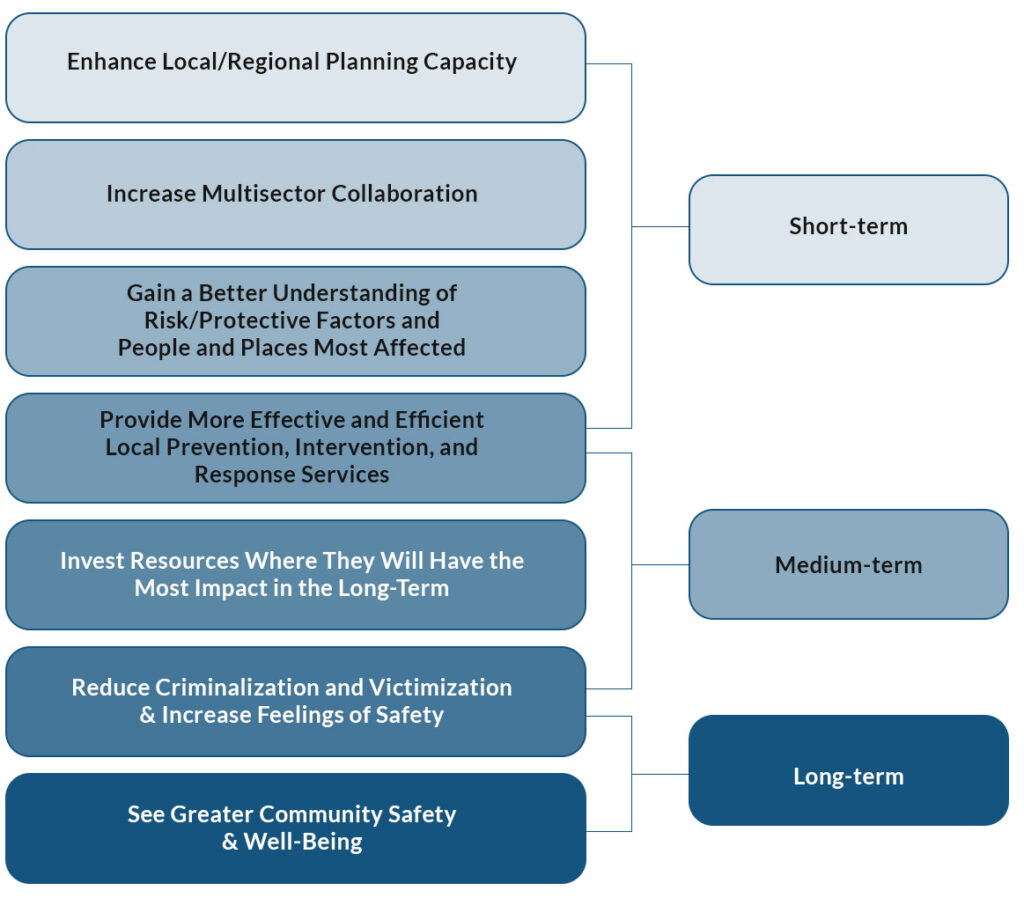
Desired Outcomes of CSWB in the Short-, Medium-, and Long-Term

Desired Outcomes

Combining Various Types of Data

There are three main types of data that should be included in community safety assessment, monitoring, and evaluation. For those communities with higher capacity or farther along with their evidence-building journey, hover over the diagram to explore examples of data at the intersections of these categories.
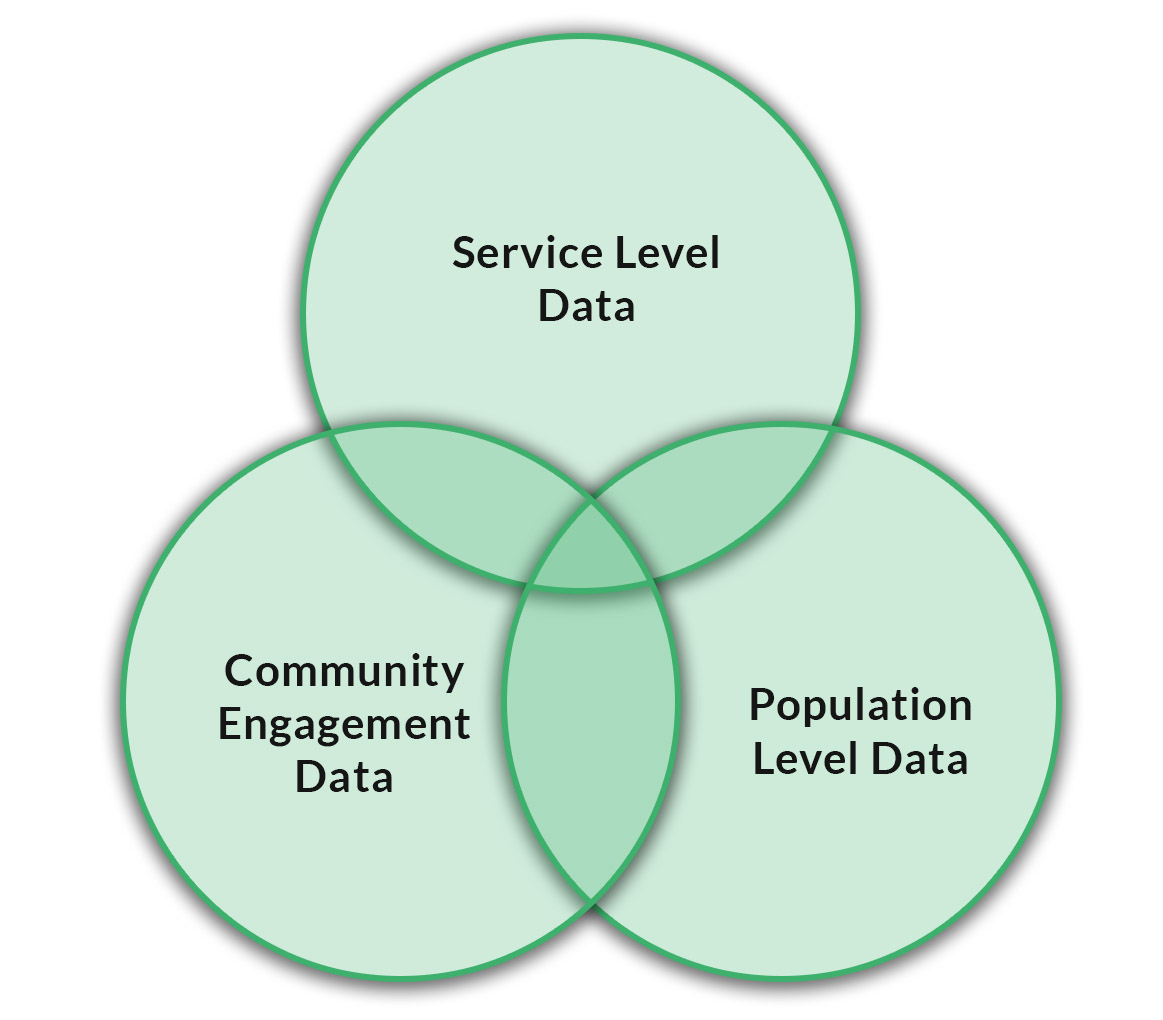
Combining Types of Data 1

Service level data

  • Information about clients, activities, and performance within programs or agencies (e.g., number of youth enrolled in a program).

Community engagement data

  • Views and experiences shared directly by community members (e.g., ongoing barriers to employment described by residents).

Population level data

  • Data describing the entire population in a geographic area, larger than any single service system (e.g., local unemployment rate).

A city-wide survey co-designed with service partners and residents, reported both for the entire population and by client group.

Lived experience input combined with service stats in a way that informs service changes.

Service administrative data aggregated to regional totals (e.g., total shelter usage city-wide).

Community surveys that run citywide (e.g., perception of safety).

These data can be gathered using a combination of different methods. In community-based monitoring and evaluation, using a mix of quantitative and qualitative data collection methods is considered best practice.

Benefits of a Mixed Methods Approach

To collect the various types of data relevant to community safety and well-being and gain a full picture of the local context, it is best to combine quantitative and qualitative data collection methods.

  • Quantitative data: Information recorded in standardized units that support counting, measuring, or ordered comparison, such as counts, rates, proportions, scales, time trends, cross-tabulations, correlations, etc. They provide a consistent way to track change over time, compare results across populations, and benchmark against regional or national figures.
  • Qualitative data: Information captured as words, narratives, observations, or images that illuminate meaning, context, and experience. Provide the nuance that complements and explains what the numbers show. These may be collected via interviews, sharing circles, focus groups, observation, open-ended survey responses, storytelling, etc.
hands making heart shape with rainbow flag and dre 2026 01 08 08 15 21 utc
  • Purpose & method fit: Choose approaches that match your purpose and capacity. This may include data sharing amongst partners, surveys, sharing circles, brief interviews, local indicators, or reflective staff notes.
  • Representation & inclusion: Be clear about who is represented (and who is not). Use intentional sampling strategies to reach priority groups and ensure findings reflect the diversity of community experiences.
  • Disaggregation: Where appropriate and safe, break down results (e.g., age, geography, income, race/ethnicity, disability) to demonstrate patterns and surface inequities.
  • Cadence & comparability: Set a timeline for when the data collection will be repeated, and use consistent definitions, tools, and instruments so results can be compared over time and across partners.
  • Triangulation & interpretation: Compare insights across multiple data sources to strengthen conclusions, while ensuring lived experience is not minimized or invalidated.
  • Documentation & supports: Record sources, instruments, limitations, and notes about your analysis and/or interpretation approaches. When engaging community members, plan for accessibility and support needs such as honoraria, childcare, transportation, food, and translation.
  • Review: When feasible, invite storytellers or community representatives to review before public sharing.
  • Timeliness & gaps: If population-level data (e.g., from Statistics Canada) are too infrequent, explore supplementing with local data collection methods to bridge the gap.

There is a long history of extractive research on Indigenous peoples rather than with Indigenous peoples. This history has led to understandable mistrust and hesitation around research, monitoring and evaluation activities among Indigenous peoples.

As Linda Tuhiwai Smith (2012) said “The word itself, ‘research’, is probably one of the dirtiest words in the indigenous world’s vocabulary. When mentioned in many indigenous contexts, it stirs up silence, it conjures up bad memories, it raises a smile that is knowing and distrustful.”

This history points to the importance of doing evidence building with Indigenous partners in a good way. Wilson (2008) identified respect, reciprocity, and relationality as the three pillars of Indigenous research. Recent guidance from Public Safety Canada’s Indigenous Evaluation: Bridging Perspectives event report (2025) reinforces the same priorities: emphasizing trust‑building, community‑led direction, clear communication, and approaches that honour Indigenous sovereignty and self‑determination.

Below are some high-level recommendations drawn from the CUSM project’s Indigenous-led Review and CCFSC’s broader learnings in supporting M & E with Indigenous partners. These are complemented by learnings that strongly align with the themes identified in Indigenous Evaluations: Bridging Perspectives (2025).

Practical Tips:

  • Prepare yourself in advance: Review resources on Indigenous M&E, research and Indigenous data sovereignty relevant to the community you’re working with. See Chapter 9 of the Tri-Council Policy Statement: Ethical Conduct for Research Involving Humans (TCPS 2) for a full overview, and regional information, such as OCAP® for First Nations, the National Inuit Strategy on Research (NISR) for Inuit communities, and Métis Nation research/data governance guidance for Métis communities. If you’re ever unsure, ask the community which guidance applies.
  • Prioritize relationship‑building early and share information transparently: Work through trusted relationships when possible. If none exist, keep your intro brief and transparent, including details about: how you have been connected. Always share the proposed benefit for the community, how you’d like to build trust, and an invitation to discuss the idea and adaptations.
  • Seek permission and guidance: Connect early with the appropriate leaders (e.g., Chiefs, Band Councils, Elders, Knowledge Keepers, or Executive Directors of Indigenous Organizations) to ensure the work is welcome and clarify who should be involved.
  • Align on community‑specific Indigenous data governance: Agree on who owns any data/stories collected within your scope; details of storage and access; how the community can correct, restrict, or withdraw content; and permissions for any public use. See an example data sharing agreement below.
  • Invite co‑design and shared decision making from the outset: In the first meeting, include ample time for relationship‑building, and to understand or co-create shared goals, priorities, decision-making processes, boundaries and concerns. Be open to various levels of guidance and feedback on the process (including details like timelines, location, facilitation, consent options).
  • Name your positionality: Share how your background, role, and assumptions may shape the work, and invite guidance on how to proceed respectfully.
  • Be flexible and adapt your process: Avoid rigid or overly formal approaches; adjust pacing, structure, and methods based on community direction.
  • Follow cultural protocols: Ask what practices should be observed (e.g., tobacco ties, smudging) and how to open and close meetings in a respectful way.
  • Avoid pan‑Indigenous assumptions: Recognize that each nation, community, or Indigenous organization has distinct protocols and expectations; always seek guidance tailored to the specific community.
  • Co‑facilitate when possible: Partner with a trusted community member to help guide discussions and ensure the process feels safe and locally grounded.
  • Ask what food and drink are appropriate: Providing refreshments is a gesture of respect and reciprocity; types and preparation can carry cultural meaning, so ask first.
  • Offer meaningful honoraria: Recognize time, knowledge, and expertise with appropriate honoraria or gifts, following community guidance.
  • Provide flexible consent options: Offer oral or written consent and treat consent as ongoing. See an example consent form below/here (TBC).
  • Foster a safe and comfortable environment, mindful of power dynamics:
    • Location: Choose a familiar, comfortable setting.
    • Participants: Ensure attendees can share safely with others present; or adapt structure/ break-outs accordingly.
    • Processes: Avoid overly formal or bureaucratic steps; stay adaptable.
    • Presentation: Dress casually and take time to genuinely connect.
  • Keep communication open: Share contact information and invite follow‑up questions or concerns.
  • Return results to the community: Share findings back in accessible, agreed-upon formats and invite community review/approval before finalizing or publishing. Confirm where results will live, how feedback will be incorporated, and any limits on further use.

Collecting, sharing, and using data for CSWB work often runs into practical and ethical hurdles, including capacity, data ownership, privacy, data quality, and how results are used. The table below summarizes common challenges we see across communities and a few examples of practical solutions that keep work moving while centring community benefit, cultural safety, and evidence quality.

Scan the table to identify issues you’re facing and which immediate actions or longer-term practices you might work towards.

Data Theme Common Challenges Common Solutions
Human & Financial Capacity
  • Uneven levels of staffing, skills, resources, and technology capacity
  • Inconsistent ability to engage in data work
  • Varied cultural, communication, or accessibility needs may limit ability to participate safely and comfortably
  • Foster leadership roles for higher capacity partners
  • Provide additional support for lower capacity partners
  • Leverage internal/external expertise (e.g., staff secondment, partnerships)
  • Leverage shared services (e.g., co-fund a data analyst)
  • Provide enabling supports (translation, compensation, transportation, accessibility)
Data Ownership
  • Concerns or lack of clarity about data access, ownership, and control
  • Tension over permissible use
  • Set early agreements and formal data-sharing agreements
  • Clarify ownership and collective data stewardship norms
  • Ensure partners understand how data will be used and who benefits
  • Uphold relational accountability
  • Enable shared access for evidence-based decision-making
Privacy
  • Ensuring personal information is protected
  • Risk of releasing identifiable data
  • Complex legal and ethical frameworks
  • Limit use of personal-level data where possible
  • Adopt explicit privacy and deidentification protocols
  • Use privacy-preserving methods as default
  • Build clear, culturally relevant consent processes
  • Build capacity around legal and ethical frameworks
Data Handling & Liability
  • Liability concerns
  • Risks in data transfers and storage
  • Build data stewardship capacity
  • Document governance approaches
  • Clarify roles and safeguards in agreements
  • Address social and cultural risks in consent processes
  • Ensure withdrawal and liability procedures are clear
Data Quality
  • Concerns about accuracy and reliability
  • Risk of misrepresenting lived experience
  • Difficulty distinguishing system vs individual conclusions
  • Create shared data dictionary
  • Document quality assurance procedures
  • Embed QA checks throughout reporting cycle
  • Triangulate across data sources
  • Be transparent about composites and integration
Data Usage & Reporting Back
  • Differences in interpretation
  • Risk communication may cause harm or misrepresentation
  • Tension between political and community goals
  • Use trauma-informed, culturally safe practices
  • Predefine expectations for outputs and review cycles
  • Share preliminary results with partners
  • Facilitate collaborative sensemaking
  • Invite participant/community review

Building on these considerations, here are some templates that can help overcome some of these data challenges.

winding turquoise river in autumn forest 2026 01 07 23 38 15 utc scaled

Building a Monitoring & Evaluation Plan

This section provides practical guidance for communities ready to move beyond light‑touch methods and begin developing a more structured Monitoring & Evaluation (M&E) plan for their CSWB efforts. Each component can be adapted based on local capacity, context, and priorities.

A monitoring & evaluation plan is a short document that outlines what you want to learn, how you will measure progress, and how results will be used to strengthen CSWB strategies. It helps partners stay aligned, clarifies expectations, and supports ethical, transparent, and systematic learning. A strong M&E plan includes:

  • Clear monitoring, evaluation or learning questions (see examples in “Types and Samples of M&E questions” below)
  • Indicators, measures and information about data sources and methods
  • Roles and responsibilities
  • Timelines and communications/ reporting expectations
  • Any equity, ethics, or privacy considerations

M&E plans should be concise, practical, and easy to update as work evolves.

Question Type Purpose CSWB Focused Examples
Monitoring Questions Track activities, outputs and reach to understand what is happening in real time.
  • How many partners and residents were engaged in specific CSWB initiatives?
  • Are specific initiatives being delivered on schedule and with all intended activities?
  • Are initiatives reaching the target number of residents? How does this vary by neighbourhood and socio-demographic groups?
  • Are service levels increasing, decreasing, or remaining the same?
Process Evaluation Questions Examine how work is being delivered and whether implementation is happening as intended, and with the quality expected.
  • How consistently are partners implementing planned CSWB initiatives?
  • Do participants in CSWB initiatives feel satisfied? Do they feel that these initiatives are equitable and accessible?
  • Are referral pathways between services functioning as intended across agencies?
  • What are the main successes, challenges, and lessons learned?
Outcome Evaluation Questions Assess short or medium-term changes for individuals, organizations, or communities.
  • What changes have residents or partners experienced since implementation?
  • Is access to supports improving for equity deserving populations?
  • Are protective factors (e.g., connection, stability, trust) increasing over time?
Impact Evaluation Questions Explore longer-term, system level shifts aligned with CSWB goals.
  • How is the initiative contributing to community vitality, safety, or well-being?
  • What signs of system change (e.g., collaboration, investment) are emerging across partners?
  • Are outcomes aligned with expected pathways in the Theory of Change?
Cost / Efficiency Evaluation Questions Understand whether resources are being used effectively and proportionately.
  • Are the benefits of this initiative commensurate with the time and resources invested?
  • Are there efficiencies or duplications across service partners that could be addressed?
  • How might resources be optimized without compromising equity or inclusion?
  1. Commit to a transformational change approach via a steady and iterative process
    • By “transformational change”: remember that this work involves tackling root causes and relies on principles of equity, shared power, and the courage to pursue meaningful long-term change.
    • By steady and iterative: remember that this work often feels overwhelming at first, but that M&E plans are meant to be living and iterative documents, revisited over time. Recognize that a commitment to steadiness and iteration will best serve continuous improvement; don’t let perfect be the enemy of the good.
    • Once alignment on approach is established, the next step is identifying the core indicators that will anchor your M&E plan.
  1. Identify your “headline” indicators.
    • Review your CSWB Plan priorities and actions, and the community assessment findings that led to them; these inform baseline indicators to look out for.
    • Consult the Logic Model and/or Theory of Change you developed for your CSWB Plan, to ensure that indicators reflect your desired outcomes. This will help your M&E efforts stay aligned with the pathways through which your CSWB work creates impact.
    • Consider which existing CSWB data or success signals already resonate with your community and partners.
    • Take an integrated approach by balancing top‑down (strategic/governmental) and bottom‑up (community‑led) inputs.
    • Consider using the Indicator Explorer and Customizer in this toolkit to assess a wide breadth of indicator options.
    • Create a short-list of 3-5 headline indicators to start with.

      Headline indicators – A small set of high‑value indicators identified by any community that best reflect their core CSWB priorities. These indicators should be meaningful to both community partners and decision makers, as well as feasible and reliable to track in the near term.

  2. Explore additional indicators for future development.
    • Identify an additional 5-8 indicators that are next most important for CSWB priority areas.
    • Mark these using a different colour or symbol to distinguish them as indicators being considered and developed.
  3. Create a Data Development Framework.
    • Build a table (sample template below) to map your priority areas, indicators, possible measures, and potential data sources. This helps clarify what is feasible now, what requires partnerships, and what can be developed over time.
    • Consider balancing coverage of indicators across community‑, service‑, and population‑level data.
    • Start with measures that are publicly available or feasible to collect soon (see Indicator Explorer & Customizer).
    • It is normal to begin with a longer list of indicators and measures and refine it over time.
    • To support an equity-informed approach that captures lived/living experience, prioritize mixed methods where feasible, supplementing quantitative measures with:
      • Sharing circles
      • Community conversations
      • Short interviews or prompts
      • Reflective notes from frontline staff or steering partners
    • Consider adding columns for data ownership and status (e.g., under development, ongoing, annual refresh).
    • Higher capacity teams may add and describe roles using a RACI structure (Responsible, Accountable, Consulted, Informed), and may consider developing a supplemental work-plan.
  4. Commit to learning and refinement over time.
    • As learning emerges (about what data is useful, what supports decision‑making, and what community members value), adjust and refine your M&E plan. Add or remove indicators and measures, update methods, incorporate partner feedback, and revisit priorities as your capacity grows.
    • Set a refresh cadence that aligns with team capacity, often annually or tied to CSWB Plan updates or reporting cycles.

There are many ways to build Data Development Frameworks, depending on the needs of your team or project. See examples below.

Sample Data Development Framework Template
CSWB theme/priority Sub-theme Indicator Data availability Measure Measure definition Availability at population level Availability at local level Data Collection Frequency Person / Team Responsible Status
Community Vitality Housing
Health care
Education

Tips and Tools for Communicating Findings

Clear, ethical communication helps ensure that monitoring and evaluation findings are understood, trusted, and used for change. This section offers practical guidance and tools for sharing results with partners, community members, and decision‑makers in ways that build alignment, support learning, and reinforce community ownership.

Share findings across partners and sectors to understand what’s working, where adjustments are needed, and how to prioritize next steps. Transparent, ethical sharing supports alignment and coordination across teams and ensures evidence meaningfully informs collective decision-making.

Present results in accessible, culturally grounded formats, such as stories, dashboards, visual summaries, and interactive maps to build trust and support meaningful participation.

When Not To Share Results

While transparency matters, there are times when sharing results may cause harm or confusion. Consider pausing, adapting, or delaying communication when:

  • Risk of stigmatization: Results could stigmatize individuals or groups, especially equity deserving communities or small populations.
  • Unclear consent or permissions: Consent is incomplete or uncertain, particularly for story-based material or partner provided data.
  • Preliminary or sensitive findings: Results are early, easily misinterpreted, or at risk of being politicized.
  • No community review: Those most affected have not had the opportunity to confirm accuracy, intent, or cultural appropriateness.
  • High-risk contexts: Situations such as crises, investigations, or sensitive community dynamics where sharing could escalate harm or breach trust.

A short pause to reassess safety, clarity, and readiness can protect relationships and ensure findings are used responsibly.

Seek opportunities for bi-directional sharing of lessons learned across the wider CSWB landscape to help build more consistent, evidence-informed strategies. Participation in CCFSC’s Membership Network is a great place to start, and includes many of the effective channels below:

  • Peer networks
  • Communities of practice
  • Provincial or federal partners
  • Sector convenings
  • Cross municipal collaborations

Treat results as a shared resource, owned by communities, not individual organizations, to support transparency, trust, and collective action.

Integrate findings into planning cycles:

Use evaluation findings to update CSWB plans, refine strategies, inform budgets, and guide long-term systems change. Set a regular cadence for reviewing results (e.g., quarterly or annually) to sustain a continuous improvement loop, ensuring plans remain responsive, evidence informed, and aligned with community priorities.

Use evaluation findings to update CSWB plans, refine strategies, inform budgets, and guide long-term systems change. Set a regular cadence for reviewing results (e.g., quarterly or annually) to sustain a continuous improvement loop, ensuring plans remain responsive, evidence informed, and aligned with community priorities.

See below for additional communications-related resources: 

  • Storytelling Considerations: Practical guidance, structures, examples, and equity/ethics considerations for story based communication in CSWB.
  • Dashboard Considerations: Key dashboard design ideas, platform comparisons and lessons learned from implementation.

Common Communication Formats

Format Description
Stories
  • Illustrate lived experience and context
  • Convey nuance and complexity
  • Explore various types: individual, composite or aggregate
Dashboards
  • Show indicators, counts, and trends that can inform planning, funding proposals, and local project development
  • Support regular updates in a publicly accessible way and promote accountability
  • Highlight patterns over time
Interactive maps
  • Provide geographic depictions of demographics and other indicators
  • Provide geographic summaries of community amenities and services
One-page briefs
  • Provide concise insights and implications without detailed analysis
  • Keep plain language and actionable
  • Ideal for rapid review
Visual summaries
(infographics, charts, maps)
  • Make findings accessible and easy to grasp
  • Avoid jargon, ensure clear labels, and include brief contextual overview
Technical reports
  • Provide full project overviews including goals, methods, results, interpretations, limitations, and recommendations
  • Include executive summaries for non-technical readers
  • Support accountability and transparency

Indicator Explorer & Customizer Tool

Use this tool to explore the thorough list of CSWB indicators and measures compiled for this toolkit, and to create a customized list for consideration in your community.

This tool is designed to help build a monitoring and evaluation plan that supports CSWB continuous learning and improvement. A mixed methods approach, combining quantitative and qualitative data, is recommended.

Communities are encouraged to leverage data that already exist at regional, provincial, or national levels; and explore collecting other measures locally through engagement, surveys, partners’ administrative data, and story-based methods.

Toolkit Citation

Please see our recommended citation information for this toolkit below. Note: this toolkit is a living resource that will continue to grow and evolve as our team learns, deepens its practice, and collaborates with communities. Minor inconsistencies may appear; we welcome feedback and will make reasonable updates as capacity allows.

  • Canadian Centre for Safer Communities. (2026). Community & Urban Safety Monitoring and Evaluation Toolkit. Retrieved on [insert date], from https://ccfsc-cccs.ca/cusm/.