Current members of CCFSC encourage all communities to join us to strengthen our voice of community-led approaches to community safety and well-being. Help us build communities where people are safe and feel safe.
By becoming a member, your community will have ready access to international and national evidence-informed community safety and well-being programs and practices, mentorship, support from community safety professionals and peer practitioners, as well as knowledge exchange events and training.
Participation in our Future of Safe Communities Speaker Series (recent topics include preventing violence in the home, climate change and violence, improving upon situation tables, the role of new media in community safety, and conducting community consultations).
Access to members-only community of practice sessions (recent topics include safety in public libraries, safety in public washrooms, gun and gang violence prevention, evaluation and monitoring of community safety efforts, and collaborative practices).
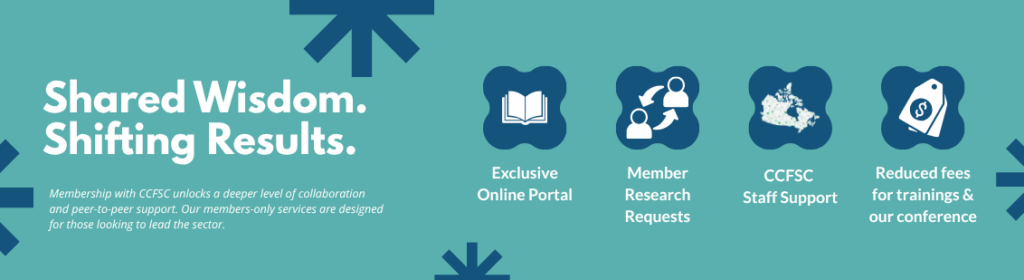
Member exclusive access to our online portal which compiles resources shared by communities.
Ability to send member requests to all CCFSC members to gather insights, information, and documents on specific topics (recent topics include asset mapping, encampments, temporary shelters, civilian responses to mental health crises, and evaluation metrics).
Priority access and reduced fees for trainings and annual conferences.
Access to ongoing support and mentoring by CCFSC staff and members.
Access to evidence-informed and promising practice.
Types of membership
Communities / municipalities
Urban, rural, and Indigenous communities
Crime prevention / community safety organizations
Organizations working at the local level in crime prevention and community safety
Members at large
Individuals with a specific skillset, knowledge, or experience that can contribute to the organization’s growth and capacities
Non-municipal governments
Any federal, provincial, or territorial government
Non-profit / government organizations
Related organizations such as training institutes, associations, non-municipal governmental organizations
Individuals
Individuals with experience in community safety and well-being (including students, retirees, and community members with lived experience)
Membership Fees
Membership fees are used for coordination, communication, and other core activities.
Annual fee per population size
$ 700
$ 900
$ 1,100
$ 1,400
$ 1,700
$ 2,100
$ 2,400
Up to 49,999
50,000 to 99,999
100,000 to 249,999
250,000 to 499,999
500,000 to 749,999
750,000 to 999,999
1,000,000 and up
Annual fee for associate members: $ 450
Membership Application process
Identify one or two individuals who will represent your community or organization